Kinetrol Actuators Overview: Engineering Excellence for Every Application
Kinetrol Pneumatic Actuators: pair a corrosion-resistant single-vane mechanism with tight tolerances to deliver accurate quarter-turn motion for valves, dampers, and indexing equipment. Their compact, balanced design reduces frictional losses, so output torque remains smooth across the entire stroke, enhancing control stability at low and high speeds alike. Engineers value the inherently low backlash of the vane geometry, which supports repeatable positioning, consistent sealing forces, and minimal wear on mated components. With modular accessories and standardized interfaces, these actuators integrate into legacy and modern automation architectures, giving maintenance teams a straightforward path to improve reliability without redesigning entire skids or control panels (Source, 2025).
Across industries—oil and gas, water and wastewater, power generation, food and beverage, and pharmaceuticals—Kinetrol’s approach emphasizes practical robustness over complexity. Accessories such as positioners, limit switch boxes, solenoids, and spring-return failsafe modules enable fit-for-purpose builds that meet process safety and quality objectives. OEMs appreciate footprint efficiency on packaging and conveying lines, while plant operators favor predictable cycle behavior during batching or ESD routines. For selection guidance, many teams consult application notes and datasheets from kinetrol actuator, then finalize sizing with air supply conditions and valve torque curves to ensure the chosen model provides adequate break-out torque and end-stop control margins.

Kinetrol Pneumatic Actuators: Key Specifications
Specification priorities typically center on torque window, hysteresis, speed control, and environmental protection. Vane actuators are known for uniform output torque and low internal friction, which helps maintain accuracy where throttling or dynamic positioning is required. Adjustable flow controls and cushioning options enable soft starts and stops to protect valve stems and seats. Materials and sealing packages can be selected to cope with washdown, outdoor exposure, or abrasive atmospheres. For lifecycle planning, many facilities track cycles-to-service and torque retention over time as KPIs; published test programs indicate endurance-focused designs can sustain long operating intervals between inspections (Source, 2025).
| KPI / Feature | Vane (Kinetrol) | Rack-and-Pinion | Scotch-Yoke |
|---|---|---|---|
| Torque Uniformity Across Stroke | High, consistent | Moderate, gear-dependent | Variable, peak near ends |
| Hysteresis / Backlash | Low | Medium | Medium |
| Air Consumption vs. Output | Favorable | Moderate | Moderate |
| Maintenance Frequency | Low (few moving parts) | Medium | Medium |
| Size-to-Torque Ratio | Compact | Standard | Larger envelopes |
| Best-Fit Applications | Throttling, precise quarter-turn | General on/off | High-breakout valves |
Application Fit: Quarter-turn valves, dampers, diverters, and indexing duties benefit from vane torque uniformity and compact envelopes.
Compliance and Safety: Options for fail-safe springs, position feedback, and air-fail positioning align with process safety management and proof-testing routines.
From a maintenance standpoint, the fewer moving parts in a single-vane mechanism simplify predictive routines and reduce opportunities for drift. Teams can standardize spares across sizes, easing storeroom management and response times during outages. Kinetrol Pneumatic Actuators: paired with clean, dry air and proper filtration tend to preserve seals, shafts, and bearings, sustaining performance within design tolerances. Combining these fundamentals with clear documentation, mounting standards, and accessory modularity gives engineering groups a repeatable template for specifying, installing, and auditing devices across sites, improving uptime and achieving consistent valve travel verification during commissioning and turnaround events (Source, 2025).
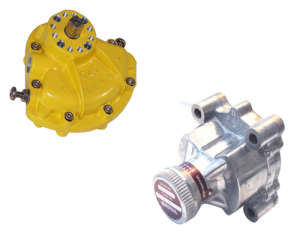
Pneumatic Actuator Performance: Kinetrol’s Advantage in Automation
Performance in automation is measured by stability, repeatability, and lifecycle cost, not just nameplate torque. Vane-style dynamics minimize stick-slip at low angles, improving PID controllability for modulating service. Smooth torque delivery reduces mechanical shock to valve stems and linkages, which can lower fugitive emissions risk and extend packing life. When combined with well-matched positioners and speed controls, operators can tune ramp profiles for fast, safe movement on interlocks while maintaining fine positioning during process control, resulting in tighter quality bands and fewer nuisance alarms in the DCS (Source, 2025).
Kinetrol Pneumatic Actuators: Performance in the Field
In real plants, reliability depends on how actuators behave under variable air quality, ambient conditions, and cycling demands. The robust vane seal path supports consistent travel without the backlash that can complicate feedback calibration, helping positioners avoid hunting at setpoints. Maintenance teams report fewer retunes after shutdowns when mounts and couplings remain undisturbed, and audit logs often show stable cycle counts between PMs. When failures occur, they typically trend predictable—seal wear or contamination—making root cause analysis straightforward and corrective actions repeatable across fleets (Source, 2025).
Energy and responsiveness are tightly connected to instrument air management. Right-sized porting, quick-exhaust valves, and clean regulators allow high-speed strokes without overshoot, while needle valves and cushions tame end-of-travel impacts for delicate seats. When specifying Kinetrol Pneumatic Actuators: consider supply pressure, valve torque curves, and target stroke times together; matching these variables prevents oversizing that wastes air and undersizing that risks stalls. Documented commissioning data—pressure, Cv, and travel feedback—helps maintainers keep performance in spec as process conditions evolve (Source, 2025).
Total cost of ownership improves when uptime, air efficiency, and maintenance labor all trend positive. Vane mechanisms, with fewer wear interfaces, simplify kitting and reduce the number of failure modes to monitor. Adding smart switch boxes or positioners that capture cycles and partial-stroke events supports condition-based maintenance, allowing PM intervals to be risk-adjusted. Across brownfield and greenfield sites, this approach reduces emergency work orders and supports >99% control valve availability targets when PM calendars are executed with discipline and clean-air standards are enforced (Source, 2025).
Sizing Strategy: Use valve torque curves with safety factors for breakaway, running, and seating to ensure adequate margin without excessive air usage.
Control Integration: Pair with positioners, smart switches, and lockout/vent valves to meet speed, feedback, and functional safety requirements in PLC/DCS architectures.
Frequently Asked Questions
How do Kinetrol vane actuators differ from rack-and-pinion designs?
Vane actuators deliver uniform torque across the stroke with very low internal backlash, which supports precise positioning and smooth throttling. Rack-and-pinion mechanisms can introduce gear-related hysteresis and varying torque characteristics, which may be acceptable for general on/off service but less optimal for sensitive modulating duties. The simpler vane mechanism also reduces part count, which can translate to lower maintenance frequency and predictable lifecycle behavior (Source, 2025).
What information is required to size an actuator correctly?
Gather the valve torque curve (breakaway, running, and seating/unseating torques), desired supply pressure, stroke time targets, and service conditions such as temperature and media. Include any accessories—spring-return modules, positioners, and quick-exhausts—since they affect net torque and speed. With this data, you can select a model that provides adequate margin without oversizing, ensuring efficient air use and reliable seating under worst-case conditions (Source, 2025).
Can these actuators operate in harsh or washdown environments?
Yes, configurations are available with corrosion-resistant materials, protective coatings, and sealing options suitable for outdoor exposure, CIP/SIP zones, and high-humidity areas. Accessory enclosures and feedback devices can be specified to match the environmental rating required by your facility standards. Proper installation, including sealed conduit and vent protection, further preserves long-term performance in demanding locations (Source, 2025).
How often should maintenance be performed on a vane actuator?
Intervals depend on cycle rates, air quality, and ambient exposure, but many facilities align inspections with plant-wide PM schedules and track cycles-to-service as a KPI. Clean, dry instrument air significantly extends seal life and helps maintain torque consistency between outages. Condition-based maintenance, aided by cycle counters and travel feedback, allows teams to adjust intervals based on actual duty severity rather than fixed calendar dates (Source, 2025).
Do Kinetrol actuators support fail-safe and emergency shutdown needs?
Spring-return modules, vent valves, and appropriately designed air circuits enable fail-close or fail-open behavior for safety instrumented functions. Integrating position feedback and partial-stroke testing features supports proof-testing and diagnostic coverage objectives within safety lifecycle management. Always validate the final assembly against the application’s required risk reduction and response time targets before service (Source, 2025).
Follow Us For more practical insights on actuator selection, performance tuning, and maintenance strategies, follow our updates to stay ahead with dependable automation know-how.
