

Kinetrol Actuators: Engineering Excellence for Every Application
Discover Kinetrol Actuators: a benchmark for precision rotary control across demanding industries where uptime, safety, and product consistency matter. Built around a robust vane principle, these pneumatic actuators deliver smooth, near-linear torque with minimal hysteresis, enabling accurate valve positioning and repeatable performance. Their compact footprint and rugged build thrive in harsh sites, from offshore platforms to hygienic processing lines. Customers value long service life, low maintenance needs, and dependable failsafe operation when paired with spring return units. Whether you manage a critical shutdown valve or a high-cycle modulating service, Kinetrol solutions are engineered to keep your process stable and predictable.
Engineering excellence begins with materials and design. Corrosion-resistant coatings, sealed bearings, and optimized vane geometry reduce friction and wear, enabling tight control even after extensive cycling. The result is consistent torque output and reduced air consumption, helping facilities cut operating costs. Many configurations align with global standards and hazardous-area requirements, supporting integration into SIL-rated safety loops when correctly applied and validated by users. Discover Kinetrol Actuators: deliver predictable performance windows that make sizing and control strategies straightforward for project teams seeking fast commissioning and confidence in critical duty cycles (Source, 2025).
Applications span oil and gas, chemical processing, water and wastewater, power generation, food and beverage, and pulp and paper. Operators trust these actuators for on-off isolation, modulating control, and emergency shutdown duties because of their stable response and repeatability across temperature swings. In clean environments, their smooth output enhances product quality by holding precise setpoints; in corrosive or dusty areas, their protective construction preserves performance. From butterfly valves to dampers, the vane-driven rotary motion ensures consistent behavior at both low and high angles, limiting overshoot and reducing the need for constant recalibration.
To help selection, compare core performance indicators across actuator types. Pneumatic vane actuators often excel in torque consistency, weight-to-output ratio, and lifecycle economics versus alternatives. Below is a concise comparison of common options used for industrial valves and dampers, distilled from field experience and engineering references relevant to modern plants adopting reliability-centered maintenance frameworks (Source, 2025).
| Criteria | Pneumatic Vane (Kinetrol) | Rack-and-Pinion Pneumatic | Electric Rotary |
|---|---|---|---|
| Torque Consistency | High, near-linear across stroke | Moderate, varies with gear lash | High, may derate with heat |
| Hysteresis/Backlash | Very low | Higher due to gearing | Low to moderate |
| Maintenance | Low, few moving parts | Moderate, seals/gears | Moderate, motors/electronics |
| Response Speed | Fast, adjustable with air controls | Fast, but less smooth | Moderate, application dependent |
| Hazardous Areas | Well-suited with air power | Well-suited with air power | Requires suitable ratings |
| TCO in Harsh Sites | Low | Moderate | Higher |
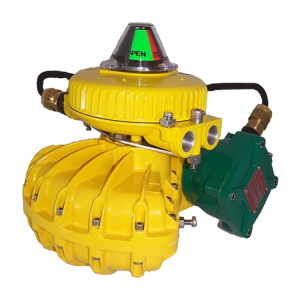
Discover Kinetrol Actuators: Key Industries
Energy and bulk processing sites value the blend of precision and ruggedness. In upstream and midstream oil and gas, vane actuators provide reliable ESD performance and tight isolation on separators, dehydrators, and flare systems. Refiners and petrochemical plants use them for modulating control on fractionators and heater dampers to stabilize temperatures and yields. Food and beverage processors appreciate cleanable surfaces and controllability that protects recipes and throughput. Water and wastewater utilities deploy them for aeration control and isolation valves, leveraging consistent torque to handle biofouling or solids without stalling or losing setpoint (Source, 2025).
Oil & Gas and Petrochemical
From pipelines to LNG terminals, pneumatic vane actuators pair with solenoids, limit switches, and partial-stroke testing to verify readiness while minimizing spurious trips. Their spring return modules offer dependable failsafe closure on loss of air, supporting safety cases when engineered within a certified loop. Operators cite smooth travel and low hysteresis as benefits for anti-surge and combustion air applications, where small control errors can cascade into production losses. Discover Kinetrol Actuators: drive predictable motion, helping teams meet emissions targets and improve equipment protection strategies in high-stakes environments (Source, 2025).
Water, Power, and Manufacturing
Municipal utilities use vane actuators for rapid, stable modulation in aeration basins and chemical dosing skids, improving energy efficiency and compliance. Power stations value compact, robust builds for damper and burner management duties that endure heat, vibration, and dust. In general manufacturing, consistent torque supports quality, especially in paint booths and drying ovens where airflow must remain steady. Maintenance teams benefit from simplified spares and fewer wear points, cutting planned downtime windows. Teams researching specifications often start with kinetrolactuator.com to align sizes, accessories, and mounting interfaces with project standards and preferred valve brands.
How Pneumatic Actuators Work: Insights from Kinetrol Experts
Pneumatic vane actuators convert compressed air into rotary motion using a sealed chamber and a single moving vane keyed to an output shaft. When air enters one side, differential pressure rotates the vane to open or close the connected valve; exhaust on the opposite side enables smooth travel. Spring return models store energy in a spring pack to move the valve to a defined failsafe position on air loss. The result is fast, reliable action with inherently simple mechanics, translating into fewer friction losses, tighter control bands, and high cycling capability in demanding services (Source, 2025).
Control sophistication comes from accessories that translate air power into precise positioning. Positioners accept 4–20 mA or digital signals to modulate supply pressure, providing stable PID control and diagnostic feedback. Solenoid valves enable on-off or ESD functions, while flow controls and snubbers tune speed and eliminate water hammer or slamming. Limit switches provide open/closed confirmation for PLCs and safety systems, and partial-stroke testing proves valve movement without interrupting production. Discover Kinetrol Actuators: integrate seamlessly with these components, enabling both reliability and transparency for maintenance and operations teams (Source, 2025).
Lifecycle advantages stem from the vane design’s minimal moving parts and even pressure distribution. With fewer seals and no gear lash, hysteresis remains low, improving repeatability in modulating duties and reducing overshoot. Plants report long intervals between overhauls and outstanding cycle counts under clean, dry air and proper filtration. Predictive maintenance programs can track performance using positioner diagnostics and pressure trends to schedule seal replacements proactively, avoiding unplanned downtime. These characteristics support lower total cost of ownership, particularly where continuous duty and frequent cycling would rapidly wear complex gear trains (Source, 2025).
Implementation best practices start with accurate torque calculations that include breakaway, run, and end torque plus safety margins for temperature, media buildup, and valve aging. Sizing tools align actuator output with valve torque curves to prevent undersizing or overshoot. Ensure clean, regulated air supply and appropriate filtration to extend seal life; confirm ISO 5211 and NAMUR interfaces for straightforward mounting and accessory fit. Finally, validate response time, stroke time, and fail action in site-specific FATs and SATs, documenting results that support compliance frameworks and continuous improvement across assets (Source, 2025).
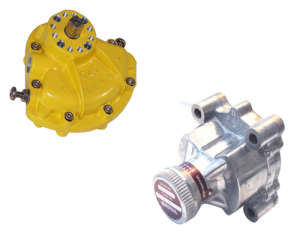
Discover Kinetrol Actuators: Pneumatic Vane Advantages
Compared to rack-and-pinion or multi-stage mechanisms, the vane architecture excels in smooth motion, fewer wear points, and compact form factor. This translates to consistent torque across the stroke, reduced hysteresis, and predictable response to control inputs. Plants benefit from faster tuning, less hunting, and improved line stability in pressure, temperature, and flow loops. Discover Kinetrol Actuators: offer a practical balance of speed, accuracy, and ruggedness, enabling both high-cycle on-off service and fine modulating control without introducing complexity that raises maintenance burden or compromises hazardous-area compatibility (Source, 2025).
Torque Consistency and Hysteresis
Torque linearity matters for valves that experience variable friction and dynamic loads, such as sticky seats or changing differential pressures. Vane actuators maintain near-uniform output through the rotation, reducing control error and easing valve positioner tuning. Low hysteresis means the commanded position closely matches actual position when the signal changes direction, limiting deadband. These characteristics enhance loop stability, cut energy use, and extend valve trim life by mitigating chatter and rapid cycling. The result is better product quality, fewer alarms, and smoother plant operation under normal and upset conditions (Source, 2025).
Failsafe Reliability and Control
Spring return modules provide deterministic fail-close or fail-open action on power loss, supporting process safety strategies. When paired with certified positioners and verified in functional testing, they can fit into SIL-rated architectures as part of a properly engineered SIS. Pneumatic power eliminates ignition sources common to some electric drives, simplifying hazardous-area compliance. Operators gain confidence through partial-stroke testing, stroke time monitoring, and clear limit signaling to DCS and PLCs. Together, these features offer a reliable, transparent control platform that balances speed, safety, and maintainability across diverse applications (Source, 2025).
Frequently Asked Questions
What makes a vane actuator different from rack-and-pinion designs?
A vane actuator uses a single moving vane in a sealed chamber, producing near-linear torque with very low backlash. Rack-and-pinion units rely on meshing gears that introduce play and wear, which can increase hysteresis and reduce modulating accuracy over time (Source, 2025).
Can pneumatic vane actuators be used in hazardous areas?
Yes, pneumatic actuators are well-suited to hazardous zones because they use air power and can avoid electrical ignition sources. With appropriate accessories and certifications, they integrate into compliant systems for petrochemical, refining, and similar environments (Source, 2025).
How do I size an actuator for my valve?
Start with the valve’s torque curve, including breakaway, running, and seating torque plus safety margins for temperature and media buildup. Match actuator output torque across the whole stroke, then verify fail action, response time, and stroke time during FAT/SAT before commissioning (Source, 2025).
Do vane actuators support precise modulating control?
Yes. Low hysteresis and smooth torque make vane actuators excellent for modulating service, especially when paired with quality positioners. Plants typically see faster loop tuning, reduced overshoot, and more stable setpoints compared to geared alternatives (Source, 2025).
What maintenance is typically required?
Under clean, dry air and proper filtration, maintenance is minimal: periodic inspection, seal replacement at planned intervals, and verification of accessory function. Diagnostics from positioners and stroke testing help schedule proactive service and minimize downtime (Source, 2025).
Can these actuators provide a reliable failsafe position?
Spring return configurations deliver a defined fail-open or fail-close action on loss of air, supporting safety and shutdown strategies. When validated within a certified loop, they can contribute to SIL targets and rapid, predictable emergency response (Source, 2025).
Follow Us
Get the latest insights on pneumatic actuation, reliability engineering, and selection tips. Follow us for updates on best practices, new accessories, and industry case studies that help you specify with confidence.
